The Dollar’s Diminishing Reign
It's no longer a fever dream. U.S. deficits and chaotic policy are driving investors toward other stores of value.



- Below is the latest edition of w3w, my free newsletter about emerging technology, including AI, Bitcoin, Ethereum, and more . If you would like to receive it in your inbox every Sunday, please subscribe here.
- I used several AI apps to assist production of this edition of w3w. Final edit 100% by me. For fuller detail, see the newsletter's commit history on GitHub.
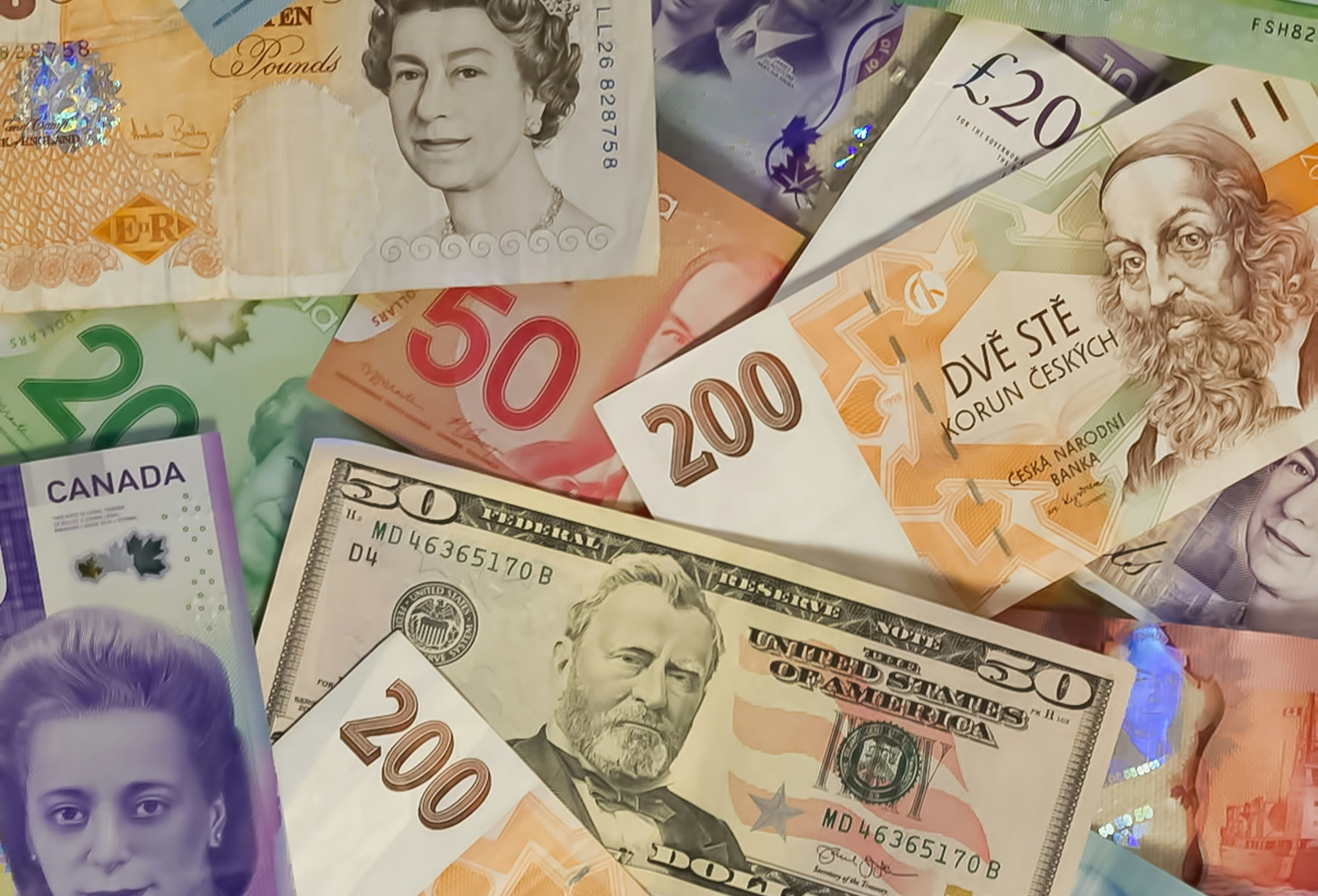
Sometime this year, I think we quietly passed a milestone in the U.S. dollar's gradual replacement as the global reserve currency.
In terms of market sentiment and narrative, this scenario suddenly seems to have gone quite mainstream, embraced even among Wall Street pros and Ivy League economists. To paraphrase a famous saying about change often misattributed to Mahatma Gandhi, we are now definitively past the stages where someone might be laughed at or summarily ignored for saying the greenback could lose its "extravagant privilege" in the speaker's lifetime.
So far, the big winners in the marketplace from this sentiment shift have been gold and bitcoin. The latter just hit a fresh all-time high above $125,000 per token in weekend trading, driven by heavy buying in Asia.
Washington's government shutdown and the Federal Reserve's recent interest-rate cut have increased traders' appetite for risker bets, including alternative stores of value in lieu of holding dollars.
Analysts at JPMorgan issued a report Wednesday saying bitcoin could hit $165,000 by year's end, driven by a continued "debasement trade."
The term refers to the idea that persistent U.S. government deficits, financed through Treasury bond issuance and lower interest-rate targets from the Fed, effectively increase the supply of dollars coursing through the global economy. In turn, that devalues dollars and increases the appeal of other forms of money among investors.
As I've written before, it also strikes me that the rest of the world is increasingly frustrated with America's political dysfunction. The latest shutdown just underscores that point, perhaps providing further incentive for foreigners to back away from relying on America's currency as their standard.
Some related developments to watch:
- Valuation of the global stablecoin market, which allows users to execute dollar-denominated transactions on-chain without using traditional banks, just topped $300 billion for the first time. European Union regulators are concerned that usage of such tokens could create liquidity crunches within the bloc at some point.
- Swift, a cooperative that operates the global infrastructure for trillions of dollars in traditional bank transfers each week, is building a new Ethereum-based system for cross-border payments.
On to the notable tech headlines elsewhere...
Week in Review: Sept. 28 to Oct. 4, 2025
- Crypto treasury companies' shares have sagged lately, with many trading below the value of their token holdings. Meanwhile, the U.S. Securities and Exchange Commission suspended trading of QMMM Holdings over potential stock manipulation around its recent announcement of plans to buy bitcoin, ether, and Solana tokens.
- America's anti-immigration push is reverberating globally in tech. Reuters reports that Silicon Valley companies are weighing whether to move more jobs offshore after the White House announced a new $100,000 fee for H-1B visas, often used for software engineers and other high-skilled foreigners. Meanwhile, other countries are already angling to attract tech talent that might otherwise move to the U.S. China is launching a new "K visa" program to attract such workers. And Canadian Prime Minister Mark Carney said his government is exploring ways to embrace America's H-1B fee hike as an "opportunity" to attract tech workers to Canada instead.
- The Wall Street Journal reports Nvidia CEO Jensen Huang is frustrated that implementation of a chips deal previously announced by the White House has stalled. Under the agreement, the U.S. Commerce Department is supposed to allow Nvidia to export billions of dollars worth of AI chips to the United Arab Emirates.
- OpenAI closed a funding round valuing the company at $500 billion. That makes it the most valuable privately held company in the world, surpassing SpaceX. (Bloomberg)
- California just passed a major AI safety law, thus setting stricter standards for the crucial Silicon Valley region. The new law requires AI companies to report what safety protocols they use in developing their software and the risks posed by their products. (New York Times)
Market Snapshot
A quick look at some major indicators as of Friday's close on Wall Street:
| Indicator | Close | Weekly | YTD |
|---|---|---|---|
| Bitcoin | $122,736.22 | +12.4% | +30.8% |
| Gold | $3,908.90/oz | +2.6% | +48.7% |
| USD Index | 97.71 | -0.5% | -9.9% |
| 10-yr U.S. Treasury Yield |
4.119% | -0.068 | -0.454 |
| Nasdaq 100 | 24,785.52 | +1.1% | +18% |
| MSCI All-Country World Index (ex US) |
1,079.75 | +3% | +28.8% |
Looking Ahead
- Wall Street giant Vanguard is considering whether to allow clients to trade exchange-traded funds (ETFs) that hold bitcoin or other digital assets on investors' behalf. Vanguard, which is the world's second-largest asset manager, has been a notable holdout on offering crypto ETFs since Washington regulators approved them for U.S. trading in January 2024. (The Block)
- Americans' access to crypto on their smartphones is improving. Samsung announced it has integrated Coinbase access into the latest version of its mobile wallet app for U.S. users... Separately, the fintech startup OnePay, which is majority-owned by Walmart, said it will soon offer crypto trading and custody through its mobile app.
- OKX founder Star Xu praised regulators in Washington and London for their increasing alignment on oversight of digital assets. He says closer collaboration could help further entrench the U.S. and Britain as global finance centers versus aspiring hubs like Singapore and Dubai. (Fortune)
Odds & Ends
- Economist David Berri took a stab at quantifying how underpaid WNBA players are compared to men in the NBA. While the men's league does bring in 50 times the revenue of the WNBA, its top players make 200 times the salaries of the WNBA's stars, Berri says. (New York Times)
- Count web pioneer Dave Winer among the folks who still refer to a certain microblogging service as "Twitter." Glad I'm not the only one! 😸
That's it for now. Thanks for reading the newsletter today! If you want to know more about w3w's history and (ahem) the author, that info is available here.
Please note, I regularly use several AI apps to assist production of w3w. But the final edit is 100% by me. For fuller detail, see the newsletter's commit history on GitHub.
If you need to reach me directly, please email peter[at]w3w[dot]media.
Best wishes for a healthy and productive week ahead. 😊